I’m Chenchen, a research-driven interaction designer and builder. I investigate human needs, design understandable interactions, and build functioning systems—then examine the assumptions and consequences behind them.
UW–Madison Computer Science + Mathematics + Art Studio
I’m Chenchen (Amily) Zheng, an undergraduate at the University of Wisconsin–Madison studying Computer Science and Mathematics and pursuing an Art Studio certificate. In the People and Robots Lab, I contributed to SHRIMP, collaborative research accepted for presentation and publication at ACM UIST 2026. I independently developed Day Echo and Math Lens and co-designed and engineered JourneyCraft. These projects connect understanding people, designing interactions, and implementing systems. Mathematics helps me reason about structure; photography sharpens my attention to framing, light, and what people notice. I’m interested in intelligent systems that interpret people’s needs while staying understandable, controllable, and open to correction.
How I work
01
Understand people and context
SHRIMP study execution and JourneyCraft’s formative walkthroughs connect observations to design questions about effort, clarity, and control.
02
Make the interaction explicit
Day Echo’s agency boundaries help me work through what a person can inspect, change, or decline.
03
Build, test, and revise
I implement decisions, test behavior, and revise. Math Lens’s adjustable representations and JourneyCraft’s release checks make iteration concrete.
Methods & capabilities
Research
User research · study execution · qualitative synthesis
Design
Interaction design · prototyping · information architecture
Photography · visual composition · computational art
Where I’m going
Through graduate study, I want to strengthen my design-research methods, develop experience concepts collaboratively, and evaluate products more rigorously in use. I hope to connect my technical and research experience to a professional design practice that builds intelligent products around people’s needs and agency.
Selected work 01—04
Research, design, and implementation— four complementary pieces of practice.
01 Human–robot interaction / Research & prototyping
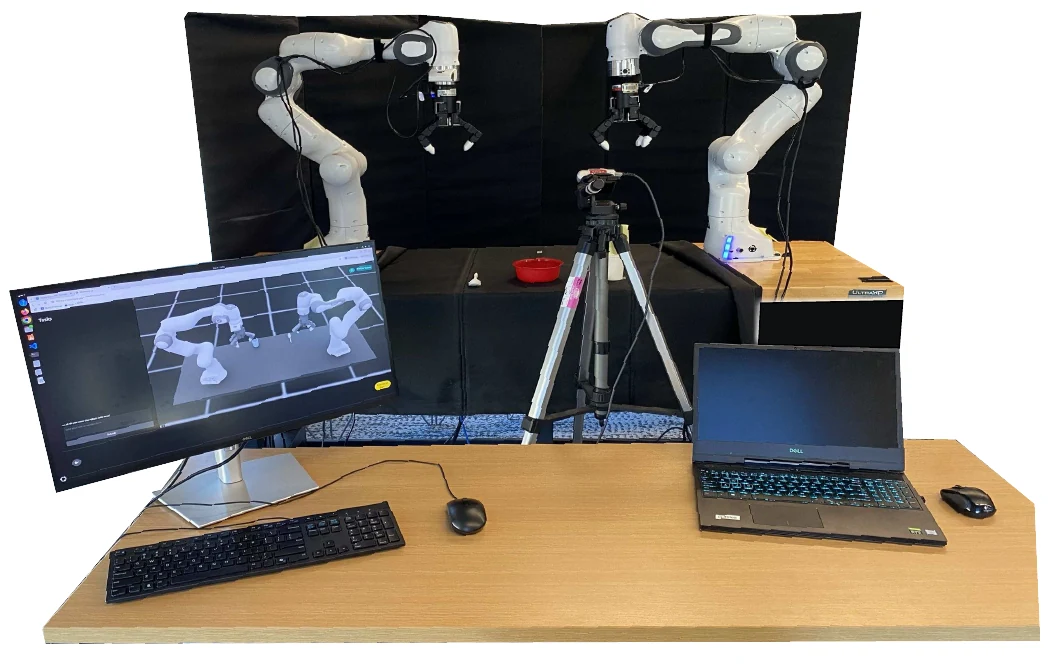
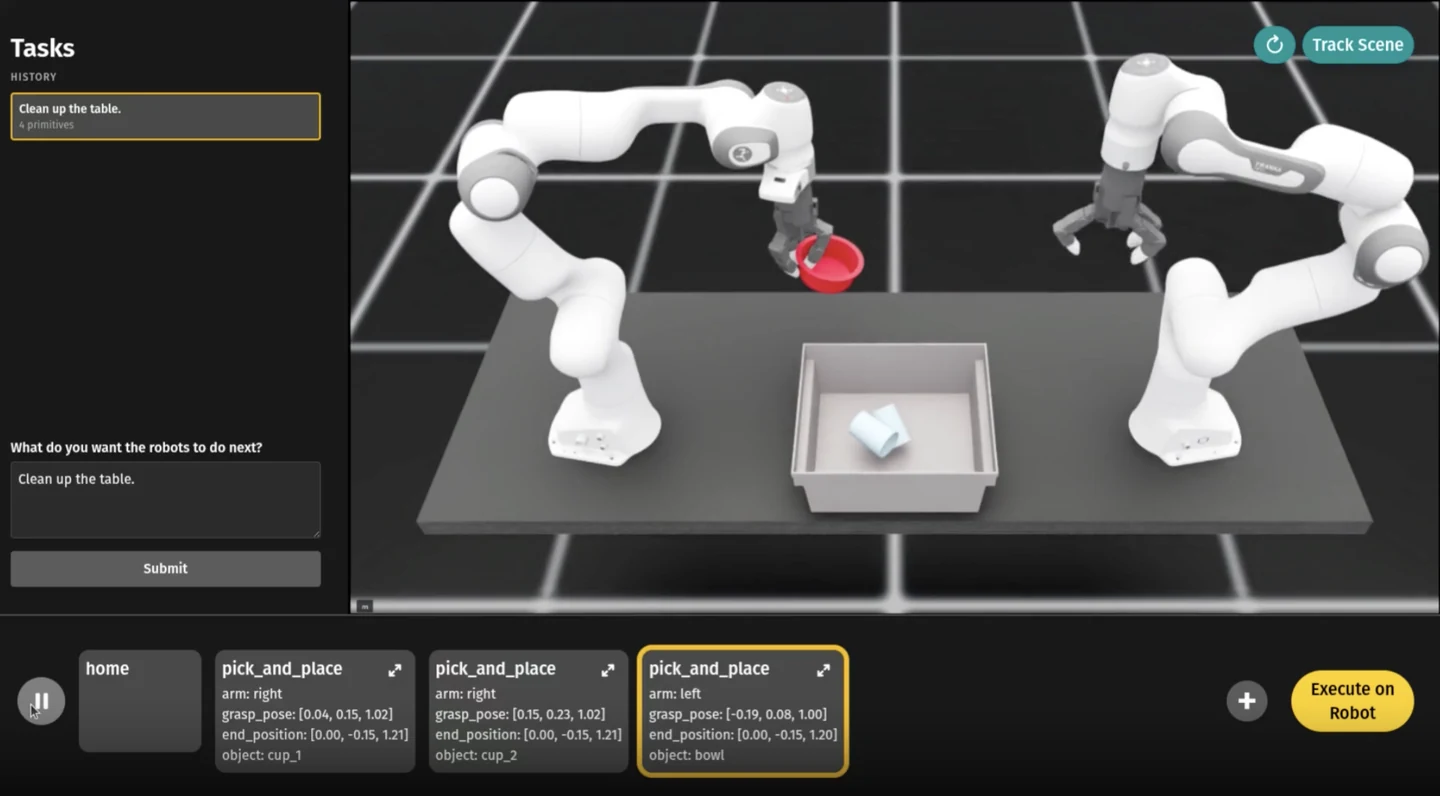
How can people correct a robot’s interpretation before it acts? I contributed perception and robot–interface integration, interaction design, testing, study execution, and manuscript development to a collaborative research system. The work connects an editable plan to simulation and physical execution.
Accepted for presentation and publication · ACM UIST 2026
Thinking → acknowledgement → Recovery, with Pause and Stop visible.
Recorded prototype + MatrixFrame simulator · not physical LED footage
Independent designer and developer
When should a context-aware system respond—and when should it wait? I designed and built a multimodal ambient companion, from agency boundaries and reversible interactions to real provider/API integration. Screen and environmental output follow a shared decision, with explicit permission and control.
Implemented prototype · formal user evaluation remains future work
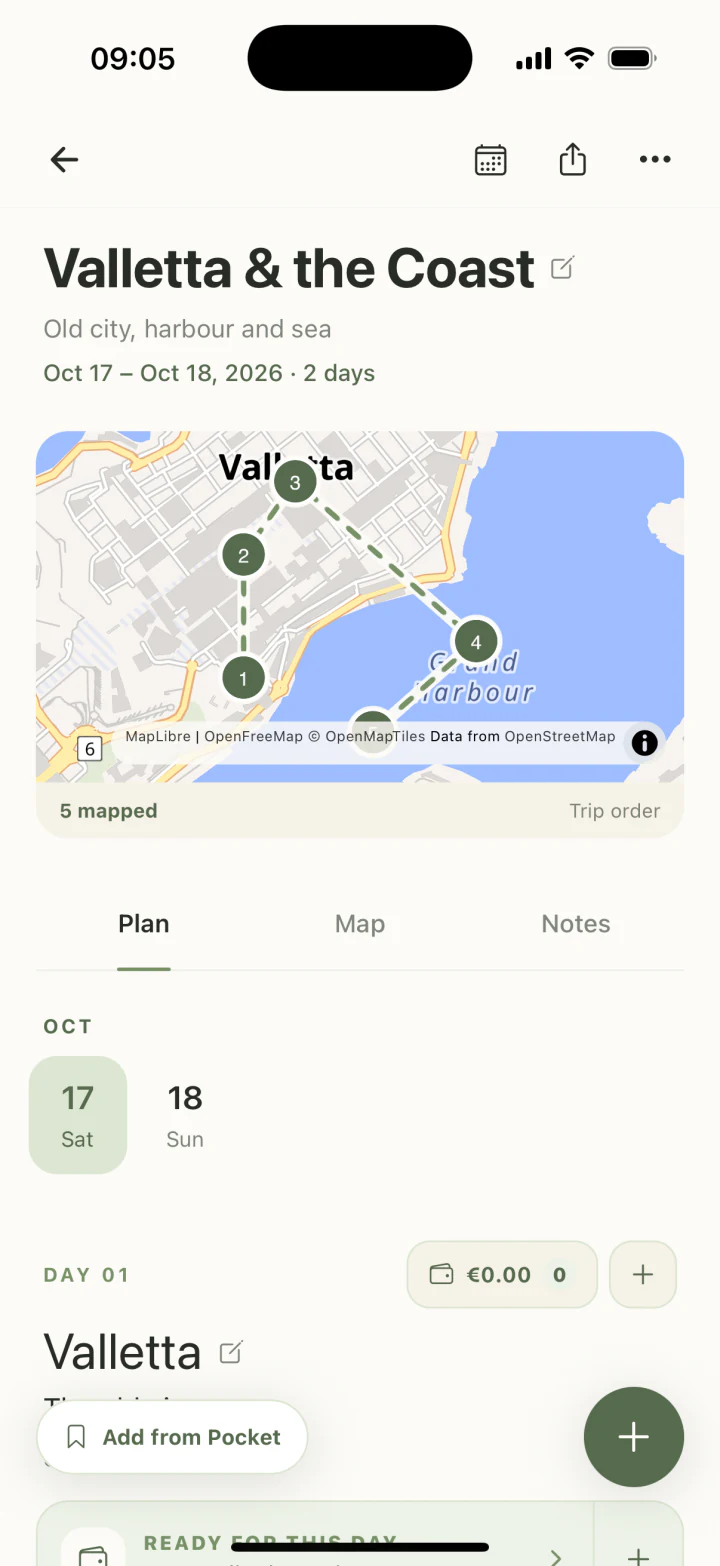
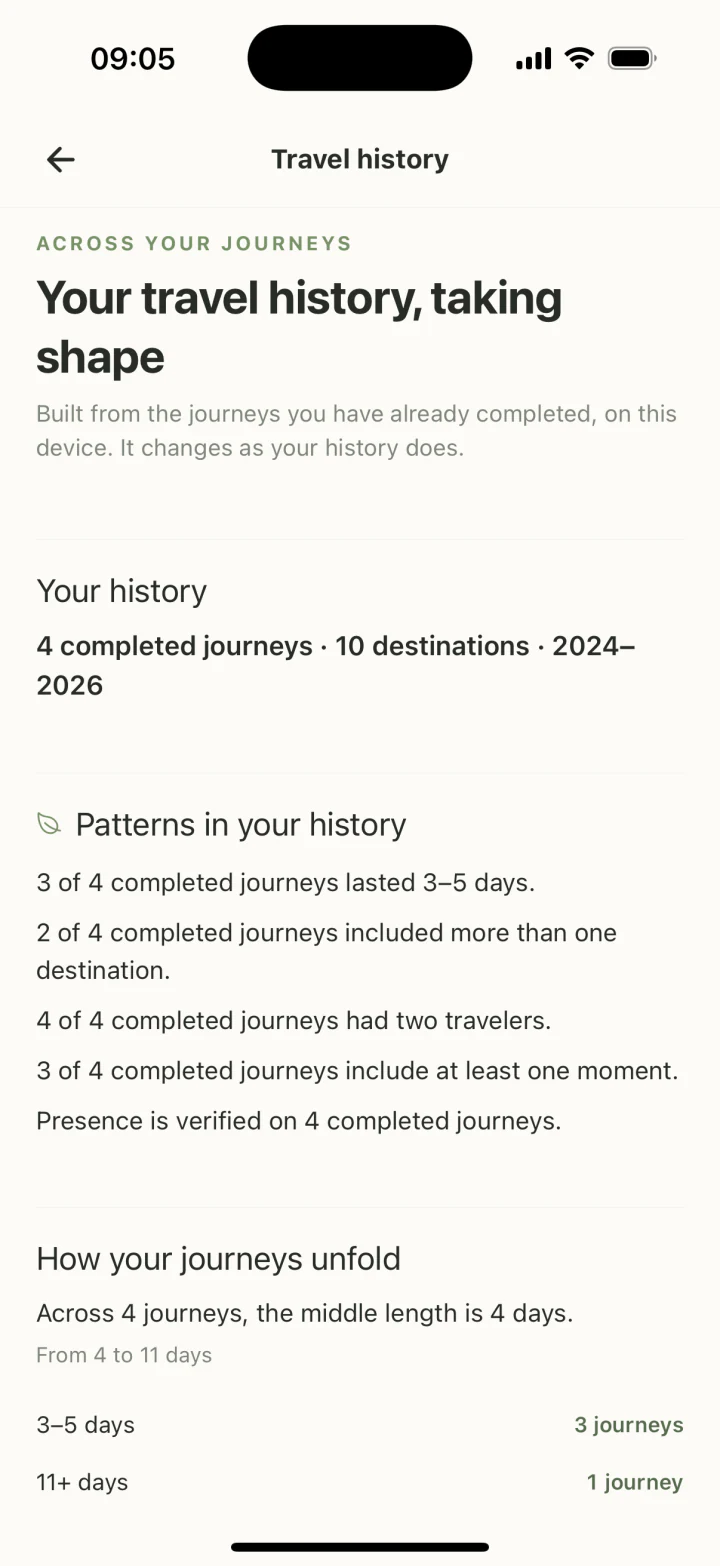
Implemented two-person prototype. Captures use real travel content with selected dates and identifying details adjusted for privacy and presentation.
Co-designer and co-engineer · two-person team
Research and formative walkthroughs shaped how this travel prototype distinguishes planned places, recorded experiences, and verified presence. In a two-person team, I co-led research, interaction design, architecture, implementation, and evaluation—making the limits of a personal record part of the product’s design.
Completed research prototype · no language model · not publicly released
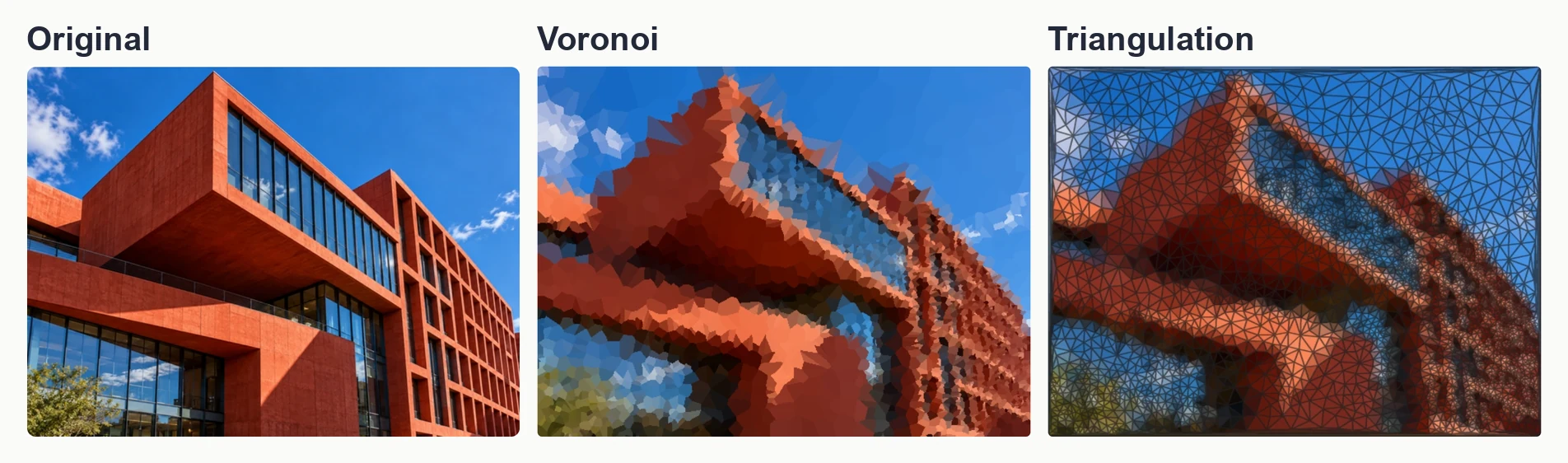
Original → Voronoi → Triangulation Actual Math Lens output
0:12 / silent recording
Brush passes expose mesh, computational stages, and the original image.
Recorded interaction · independent Math Lens implementation
Independent designer and developer
I independently designed and developed an interface for exploring images through Voronoi regions and Delaunay triangulation. Adjustable parameters and Layer Reveal expose the computation behind the image, turning mathematical representations into something people can inspect, compare, and reshape rather than simply view.
Ongoing project · implemented lenses and Layer Reveal